The Pearl of the Vologne: Treasure of the Dukes of Lorraine
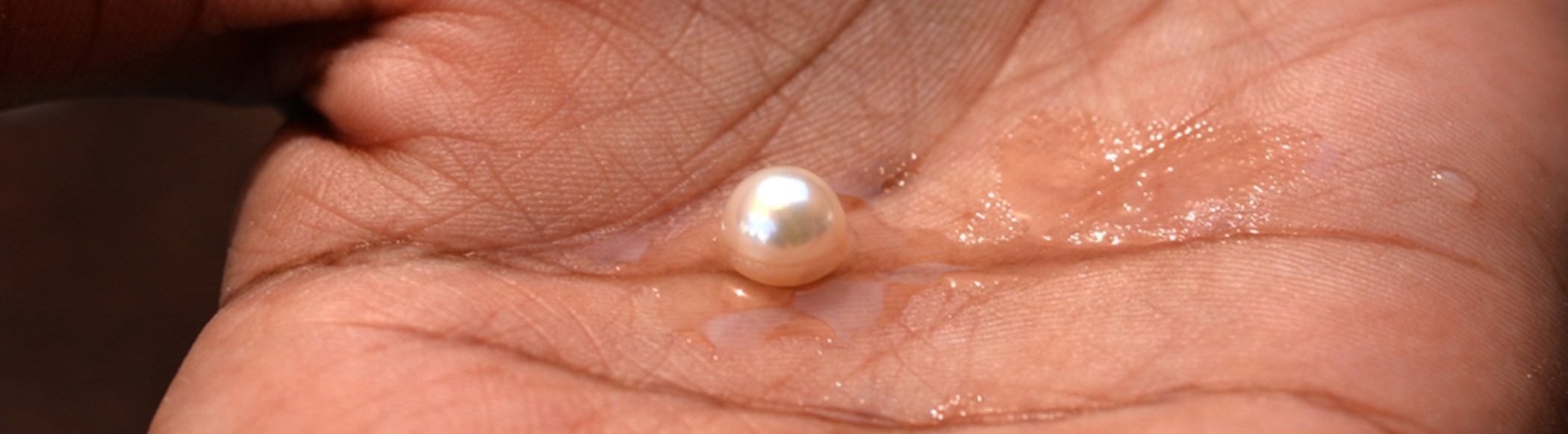
For nearly four centuries (from the 15th to the 19th century), the freshwater pearls from the Vosges rivers (notably the Vologne) contributed to the wealth and renown of the Duchy of Lorraine. Intensively exploited, these pearls gradually disappeared.
In this post, we talk about malacology (the study of mollusks !), their economic importance, and the reasons for their extinction.
Origin and formation of the Vologne pearls
Freshwater pearls are produced by bivalve mollusks, notably the freshwater pearl mussel (Margaritifera margaritifera). When a parasite enters the shell, the mussel reacts by coating the intruder with nacre (calcium carbonate), thus forming a pearl. This natural process is now imitated in the cultured pearl industry.
The Vologne pearls, as well as those from the Neuné and Barba rivers, were particularly prized for their diversity of colors: milky white, pink, violet, gray, blue, and reddish.
Pearl harvesting and their historical importance
1. The harvesting of Vologne pearls dates back to the 13th century.
The first written mention appears on a map of Lorraine from 1513, with the Latin inscription « In hoc flumine reperiuntur margaritae » (« Pearls are found in this river »). Over the centuries, these pearls became a symbol of wealth and prestige for the Dukes of Lorraine.
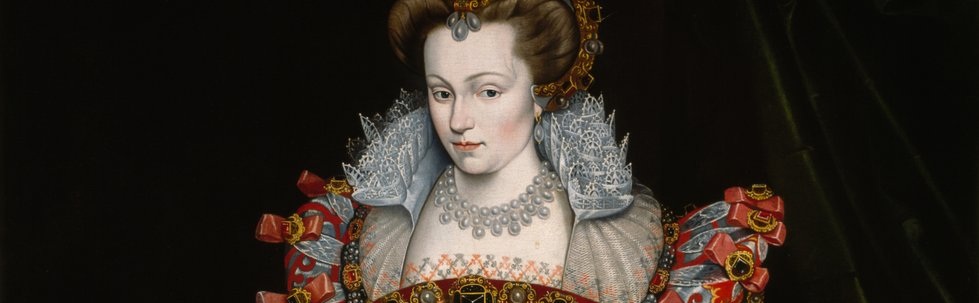
Historical references show that these pearls were offered to sovereigns and used in the making of jewelry for the nobility. Renée de Bourbon-Montpensier, Catherine de’ Medici, and Marie-Thérèse of France are said to have owned adornments decorated with Vologne pearls.
2. Fishing conditions and regulations
From the 17th century onward, fishing for pearl mussels was regulated. The Dukes of Lorraine granted exploitation rights, and pearl wardens were tasked with monitoring and preserving mussel populations. Some documents from the 17th and 18th centuries describe these fishing practices and the associated taxes in detail.
Pearls were generally harvested between June and July. Half of the income from this fishery was paid to the Duchies of Lorraine and to the church of Remiremont. However, as early as the 18th century, sources report a scarcity of pearls due to increasing overexploitation.
3. Decline and extinction of the Vologne pearls
In the 19th century, several factors contributed to the disappearance of pearl mussels:
- Overfishing and excessive exploitation, leading to a reduction in mussel populations,
- Industrial pollution, notably from the paper and textile industries, which degraded water quality,
- Disappearance of host fish (such as brown trout) essential to the mussels’ life cycle.
By the end of the 19th century, the Vologne pearls had almost completely disappeared. Le Figaro reported in 1892 that « pearls once abounded in the Vologne but have more or less disappeared completely ».
Legacy and memory of the Vologne pearls
1. The pearls were celebrated by poets
Jean-Claude Sommier, parish priest of Champ, is said to have written verses in 1702 about the Vosges pearls :
« The Vologne, above all, true Ganges of the Voge
Draws the Prior’s gaze and praise. / There he sees pearls and gold take shape
Found in its bosom, shining along the bank. »
Philippe Antoine Chainel, lord of Château-sur-Perle (a feudal manor, once located on a small mountain between Docelles and Cheniménil) is the author of a heroic poem in which Venus wished to leave the young girls of the Vôge a souvenir of her journey :
« Seated on the greenery in t’he shade o’f a grove,
Venus saw the Vologne, and wished to bathe there
T’he water was clear and offered its bosom.
She enters and, disporting herself like an eel,
She gives birth to a fetus covered with a shell.
Carried away by the waves, this original germ
Was fixed on the point in the middle of the channel.
Yet, having received life from Venus
To nature’s wish the oyster was bound
Along the river, soon one also saw
Of her offspring a very numerous deposit.
But, in the oyster, when opening it, the fisherman finds
A fine-water pearl, of dazzling display.
The gallant jeweler fashions adornments from it
That women dote on in town and at court ».
2. A lasting cultural and historical imprint
Archives and old accounts attest to the importance of these pearls in fashion and in the adornments of the Duchesses of Lorraine. Some sources mention that Joséphine de Beauharnais is said to have tried to introduce Vosges pearl mussels into the ponds of Malmaison, without success.
Preservation attempts and current status
Today, the freshwater pearl mussel is a protected species in France. It is listed in the Bern Convention (1979) and is classified as an endangered species by the IUCN. Since 2012, a national action plan has aimed to restore its populations in certain French rivers.
In Lorraine, a survey carried out in 2007 counted only three living mussels over 15 km of the Neuné, confirming their near-extinction.
Long before we put the ALM logo on the workwear we make, our very first brand was : « Pearl of the Vologne » in reference to the pearl that came to adorn the wedding dresses made by Mrs Ongania !
We invite you to discover our region for its heritage : via the Vologne Pearls ecological trail (near Gérardmer), the place-name Château-sur-Perle (recalling the former fortified house of Duke Ferry III), or by discovering the collection of 186 pearls (kept at the Muséum-Aquarium de Nancy). We also recommend the magnificent documentary made by Hippolyte Burkhart-Uhlen (« The Pearls of the Vologne »).
Would you like to develop workwear with meaning ? Get in touch today with ALM’s sales teams to create items inspired by our local identity.