
How do you choose the right outfit for your employees?
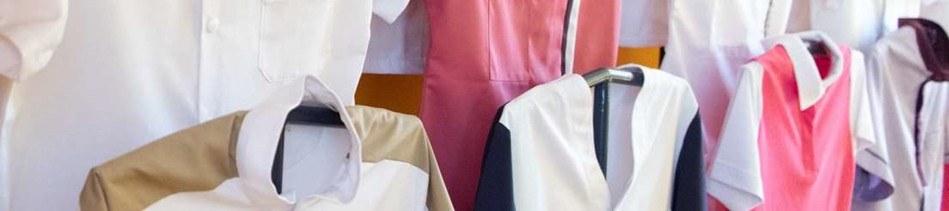
Explore the criteria to take into account when choosing workwear depending on the sector of activity, whether it's healthcare, catering, industry, logistics or other.
Choosing the right business attire for your employees is not just a question of budget or appearance; it also reflects the identity of your company (or group), regulatory requirements and comfort at work.
In this post, we look at the essential criteria for choosing your workwear (in particular work tops & work bottoms) depending on the establishment, activity, function, frequency of use, regulatory requirements & maintenance conditions.
1. Understanding the needs of your business
Type of establishment: dress requirements vary depending on the sector (health & well-being, industry, logistics, cra s, etc.). Make sure that your professional clothing reflects the context in which your employees work.
Company culture and image: determine whether your company has a formal, casual or innovative image. For example, a service company such as a linen hire company might opt for suits and tailoring for its sales staff, shirts and ties for its service agents, while a hospital laundry might prefer more casual outfits.
Brand consistency :
- Choice of colours & patterns: dark colours hide stains better and require less frequent washing. Plain colours or simple patterns are less subject to trends, so you can keep them for longer,
- Personalisation: Use the company logo and brand colours to personalise clothing. This helps reinforce brand visibility and creates a consistent look,
- Uniformity: Make sure that clothing is uniform for all employees if this corresponds to the desired image. This helps to reinforce the sense of belonging and brand recognition.
- Mission and values: Clothing should reflect the company's brand image. For example, a company focused on innovation and creativity might opt for modern, stylish clothing, while a company committed to sustainable development should favour the use of circular, recycled or natural fibres & give preference to low-impact suppliers.
- Inclusivity: Choose clothing that suits all employees, taking into account the diversity of sizes and specific needs (distributors o en impose sizes from 0 to 7, excluding "made-to-measure sizes),
- Stakeholders: Consider the audience with whom the company interacts. Clothing must create a good impression and meet the expectations of customers and partners.
2. Business attire according to activity
Health sector
- Recommended clothing: tunic (women's tunic as distinct from men's tunic), jacket, white smock, comfortable trousers (sometimes even pantacourt), but also polo shirt & tee-shirt; or even specific equipment (helmet, bouldering suit, cap, overshoes, safety shoes, etc.),
- Features :
- Comfort & hygiene: clothing must be easy to wash and stain-resistant, o Practicality: opt for breathable, antibacterial fabrics
- Colours: simple, light colours are o en preferred for practical and hygienic reasons.
Restaurant and hotel services
- Recommended attire: shirt, jacket, waistcoat, trousers or suit for front-ofhouse staff; polo shirt, trousers & cooking jacket, safety shoes for kitchen staff,
- Features :
- Resistance to soiling: fabrics must be stain-resistant and easy to clean (grease stains, fishy smells, etc.), o Comfort: clothing must be practical and allow freedom of movement.
Construction & building :
- Recommended clothing: high-visibility (HV) polo shirt or T-shirt, kitchen jacket, bodywarmer, so shell or fleece, weatherproof jacket or parka, work shorts, reinforced trousers or overalls, safety shoes (particularly men's safety trainers),
- Features :
- Safety and protection: make sure your clothing complies with current safety standards,
- Durability: materials must be durable and resistant to harsh working conditions,
- Visibility: use bright colours & reflective strips for better visibility.
Retail :
- Recommended attire: polo shirt or blouse, waistcoat, bodywarmer or fleece, jacket or blouse appropriate to the type of shop,
- Features :
- Comfort & convenience: employees need to be able to move around easily and feel comfortable during their working hours,
- Brand image: clothing must be in keeping with the company's brand image or the employee's department (green for fruit and vegetables, red for butchers, blue for fishmongers, beige for bakers and confectioners, white for dairy products, burgundy for wines and spirits, brown for garden centres, etc.).
Food industry or other :
- Recommended clothing: T-shirt or polo shirt, chasuble, jacket or blouse, trousers, overalls or overalls for preparing and handling products. Shirt and trousers for field supervisors. Fleece, waistcoat, jacket or blouson, with trousers or overalls for sensitive environments (positive cold, negative cold, chemical risk, fire risk, etc.).
- Features :
- Soil resistance: fabrics must be stain-resistant and easy to clean (particularly for overalls), o Comfort: clothing must be practical and allow freedom of movement,
Transport & logistics :
- Recommended clothing: T-shirt or polo shirt, waistcoat, bodywarmer or fleece, jacket or blouse, trousers, safety shoes for drivers and handling personnel,
- Features :
- Resistance & comfort: clothing must withstand a variety of conditions (hot environments in summer, cold in winter) & offer comfort during long working hours,
- Visibility: clothing must include reflective elements for safety (highvisibility clothing or other PPE clothing).
3. Adapting clothing to employees' jobs or departments
- Management: some employees may require formal clothing such as shirts, waistcoats, suits or tailoring to maintain a professional image,
- Employees in the field: for jobs requiring frequent travel or physical tasks, opt for functional and comfortable clothing, while complying with safety standards,
- Night staff, afternoon staff, temporary staff, apprentices, specialized service...: you can distinguish an employee by the model chosen, the colour of the uniform or a simple marking (badge, silk-screen printing or embroidery).
4. Take into account the frequency of use
- For employees who need to wear workwear on a daily basis, make sure that the garments are designed to withstand frequent use and washing. Check that the material, context and weight are appropriate.
- For clothes that are not worn every day (parka, waistcoat...), choose items that are easy to care for.
- Define the exchange rule for staffing to ensure the safety, hygiene and presentation of employees while optimising stock management and costs.
- Nature of the work: identify the tasks performed and the associated risks (dirt, contact with chemicals, etc.). In the food industry, different clothing can be worn in "clean" and "dirtyareas. The HACCP (Hazard Analysis Critical Control Point) system identifies the critical points at which clothing may need to be replaced to avoid contamination.
- Type of garment: will it be in direct contact with the skin? Jackets, bodywarmers, so shells or fleeces can be washed less frequently than Tshirts, polo shirts or shirts.
- Legal considerations and collective agreements: Ensure that the rule you have defined complies with legal obligations in terms of health and safety & takes into account the provisions of collective agreements that could affect staffing.
- Quantities per employee: depending on the frequency of washing and the rotations required. For example, an employee who needs to change trousers once a week and polo shirts once a day should be provided with 1 pair of trousers and 5 polo shirts for the week; for a weekly collection, 3 pairs of trousers and 11 polo shirts should be provided (1 pair of trousers for the even week, 1 pair of trousers for the odd week and 1 pair of trousers for the cloakroom). For twice-weekly collections, the provision may be reduced (2 trousers & 7 polo shirts); conversely, it must be increased for four-weekly collections (5 trousers & 21 polo shirts).
5. Meeting regulatory requirements
- Safety standards: make sure that the outfits comply with the safety standards specific to your sector, such as PPE (Personal Protective Equipment),
- Hygiene regulations: in certain sectors such as the food or medical industries, strict hygiene standards dictate the choice of clothing (smocks, gowns, caps, etc.). If the requirements of a job forbid the use of accessories not related to the department, it may not be appropriate to put pockets on clothing, at the risk of an employee forgetting a badge, telephone, scalpel or catheter!
6. Keep records of the care and maintenance of items
- Choice of materials: you need to anticipate the conditions under which the linen will be cared for, depending on whether it is being looked a er by an employee, within the establishment or entrusted to a professional (dry cleaner, industrial launderer, etc.). Some fabrics are more delicate to care for than others (shrinkage, fading, etc.),
- Polyester: crease-resistant and hard-wearing, easy to wash, dry or iron,
- Cotton: comfortable and breathable, but requires more delicate care. Opt for a cotton blend (polyester-cotton) if you're looking for something easier to care for,
- Lyocell: creases more than cotton. It should not be over-dried (prefer drum care and avoid the finishing tunnel),
- Type of clothing :
- Suits, shirts or accessories: choose fabrics that don't crease easily and keep their shape a er washing.
- Tunic, jacket and blouse: choose fabrics that are easy to iron,
- Trousers: look for crease- and stain-resistant fabrics. Polycotton fabrics with a grammage greater than 200gr/m2 perform better than those weighing less than 180gr/m2 (which is likely to be transparent!).
- Maintenance instructions :
- Washing temperature: choose garments that can be washed in an industrial wash (>95°C) and avoid those that require dry-cleaning if you prefer to minimise costs and complex maintenance,
- Finishing temperature: opt for garments that can be dried at a high temperature to make ironing easier (>160°C).
If degrees Fahrenheit feels more familiar, a quick conversion will do the trick: "°F = °C × 9/5 + 32".
- Traceability: anticipate the marking of the garments (barcode, RFiD chip: high frequency or low frequency) and don't neglect the quality and positioning of the accessories. ALM recommends certain references that are perfectly suited to industrial installation and maintenance (195 to 210°C, for 9 to 14s, at 3 or 4 bars),
- Durability & repairability :
- Seams & finishing: make sure the garments are well made, with strong seams and quality finishing,
- Repairability: opt for simple models that can be easily repaired if necessary.
By following these tips, you should be able to select professional clothing that is not only stylish but also practical to maintain, saving you time and energy.
Choosing the right business attire requires a thorough assessment of the needs of the establishment, the departments, the functions and the specific requirements. By taking these factors into account, you not only ensure a consistent and professional image for your company, but also the comfort and safety of your employees.
As with all organisational or strategic changes, it is important to involve your teams in the choice of items and equipment. Don't neglect employee feedback to avoid deploying outfits that don't meet their requirements and won't be used.
For more personalised advice on the selection of professional clothing, contact our sales teams, who will share with you the best practices of establishments comparable to yours.
Before making a large purchase, ask the ALM teams for samples or prototypes to check the quality, comfort and appearance of the garments.