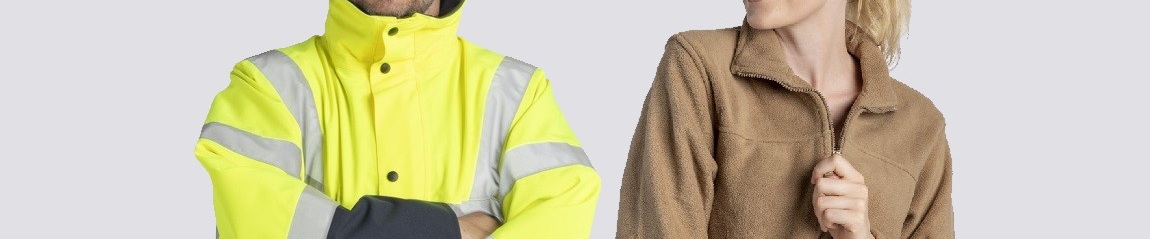
How to adapt workwear to the seasons?

In many sectors (healthcare, construction, industry, hospitality, or food trades), workwear is an essential link in performance and well-being at work. Yet one factor is sometimes overlooked: adapting outfits to external constraints. Thermal comfort, safety, hygiene and mobility vary depending on weather conditions.
In this post, we share a few recommendations to help you determine the right outfits for each season.
Choose technical, breathable materials
1. Hot environment : release heat & perspiration
To avoid discomfort and risks related to overheating, it is crucial to prioritize lightweight, breathable and technical materials.
- Lightweight & breathable fabrics :
ü Optimal thermal comfort : lightweight, breathable fabrics help regulate body temperature by letting heat escape while allowing air to circulate. This helps maintain a cooler body temperature, reducing the risk of heat stroke or discomfort caused by excessive heat. This thermal comfort is particularly important for workers who spend long hours outdoors or in hot environments, such as worksites, kitchens or warehouses (e.g. : CHARLOTTE 2/1 twill PC 50/50 in 180gr/m2),
ü Moisture management and reduced perspiration : breathable fabrics can absorb moisture produced by perspiration, wick it away quickly and keep the skin dry. This reduces discomfort caused by moisture build-up. In other words, these fabrics promote a quick-drying effect, essential during hot days when perspiration is more abundant (e.g. : OXFORD 2/1 twill LYO/PES 50/50 in 195gr/m2),
ü Reduced bad odors : The combination of lightness, breathability and moisture management also helps reduce odor formation linked to perspiration. Breathable fabrics prevent moisture from stagnating, a factor often responsible for bad odors in workwear (e.g. : SBM 2000 2/1 twill PC 65/35 in 210gr/m2),
- Specialized technical materials :
ALM can work with you to study technical fabrics that wick away moisture and enable better thermal regulation (e.g. : Teredo 37.5 : 40% Polyester, 25% Cocona 37.5 35% Cotton, 200g/m2),
- With specific finishes
ü Water-repellent finish : makes the fabric water-resistant without blocking breathability,
ü UV-protective finish : protects the skin against ultraviolet rays (UVA/UVB),
ü Anti-odor (antibacterial) finish : limits the growth of bacteria linked to perspiration,
ü Absorbent finish : wicks away moisture by capturing sweat and moving it to the outside of the fabric, where it evaporates.
2. Winter : retain heat & wick away perspiration, without restricting movement.
Depending on the conditions of the work environment, you must determine requirements related to warmth, durability, comfort, breathability, as well as waterproofing or windproof effect,
- Thick or brushed cotton
Provides good natural thermal insulation, soft to the touch, breathable, comfortable to wear for long periods. The main drawback may be linked to moisture absorption constraints (can dry slowly),
- A blend of natural & synthetic fibers
Polycotton is an excellent compromise : cotton provides warmth & comfort and polyester provides durability, abrasion resistance as well as quick drying,
- Specialized technical materials :
ü Softshell : The benefits are numerous ; windproof effect, breathable, resists light rain, flexible, lightweight... However, these fabrics are less warm than a lined garment and are not 100% waterproof,
ü Fleece : highly insulating, lightweight, soft & quick-drying. On the other hand, this fabric does not protect from win & is not waterproof,
ü Technical fabrics with membrane : Windproof, waterproof & breathable.
- Multi-layer clothing :
Thermal underwear, fleeces, softshell jackets and waterproof parkas make an effective combination against cold and moisture. Ergonomic linings: provide a soft feel and prevent irritation (e.g. : Duo Propital : 65% Polyester, 35% Cotton 210g/m2 with 100% polyester wadding of 150gr/m2 and lining 50% polyester, 50% cotton of 145gr/m2).
- With specific finishes
ü Windproof finish : integrated into the fabric weave or via a thin membrane, it creates a barrier against drafts,
ü Water-repellent or waterproofing finish : strengthens water resistance or makes the fabric fully waterproof (depending on the level of treatment). Often associated with standards (e.g.: EN 343 for PPE,
ü Thermal insulating finish : can be a treatment or a combination with hollow fibers or thermoregulating membranes. It can also be based on reflecting body heat (aluminized fabric or insulating micro-layer),
ü Brushed or sueded finish (warm finish) : makes the inside of the fabric soft and warmer, creating a “ fleece ” effect.
Adapt cuts and styles
The fit of workwear is also a seasonal matter. In summer, short sleeves, loose cuts and lightweight trousers promote ventilation and freedom of movement. Some models even feature ventilation zones, air-mesh panels or stretch materials to combine technical performance & comfort (e.g. : piqué knit PC 50/50 240gr/m²).
In winter, cuts must allow layering without causing discomfort. Jackets with inner pockets, watertight closures and adjustable hoods offer better protection against bad weather, while maintaining ergonomics designed for professional movements.
- Short-sleeved (or 3/4-sleeved) work tops
Long sleeves can be too warm, especially in a temperature-controlled environment. Short sleeves (or 3/4) allow better air circulation while still offering some protection,
- A fitted but comfortable cut :
A cut that is too tight can restrict airflow and increase body heat. Choose garments that leave space for ventilation while being fitted enough not to hinder movement. Raglan and set-in sleeves, which follow the shape of the arm, can trap more air and heat than kimono sleeves. The loose shape of the kimono sleeve allows greater freedom of movement, which can also help release body heat by allowing air to circulate freely around the arm and armpit. ALM can work with you to study technical fabrics offering stretch, durability and comfort (e.g. : KFlex : 36% Recycled Pes,32% cotton,29% Polyester,3% Elastolefin in 215gr/m2),
- Flexible work bottoms with an elastic waistband :
Trousers with an elastic waistband are often more comfortable, especially during long periods standing or moving.
Think safety and visibility in every season
Safety requirements also vary with the seasons. For example, in winter, reduced daylight makes it crucial to integrate retro-reflective strips or high-visibility colors into clothing. EN ISO 20471-certified fluorescent parkas, trousers or vests ensure better visibility on worksites or outdoors.
In summer, risks may be linked to the sun: prolonged exposure, heat stroke, burns. Some workwear is designed with UV-protective treatments or fibers that block harmful rays, while maintaining optimal breathability.
Anticipate the specific needs of each sector
A healthcare professional does not face the same weather constraints as an outdoor maintenance worker. It is therefore essential to adapt clothing to the work environment, taking the season into account.
- In hospitals, lightweight and antibacterial tunics are preferred in summer.
- In logistics or transport, windproof jackets and thermal gloves are essential in winter.
- In catering, breathable or ventilated chef jackets improve comfort in the heat of the stoves.
Promote durability and easy care
Workwear must remain high-performing despite repeated washing and usage constraints. That is why durable, OEKO-TEX-certified fabrics, especially woven & finished in Europe, should be prioritized. Opting for modular or renewable collections according to the seasons also makes stock management easier and strengthens customer loyalty.
Adapting workwear to the seasons means improving comfort, safety and productivity for employees throughout the year. A central issue for employers as well as clothing brands. By integrating technical materials, evolving cuts and sector-specific solutions, it is possible to offer outfits that are both high-performing, attractive and durable. A great way to enhance your company image and optimize working conditions in every season.
Get in touch with our sales teams today so we can identify together the items we could design to equip your employees.