
Natural dyes: when nature was coloring our fabrics
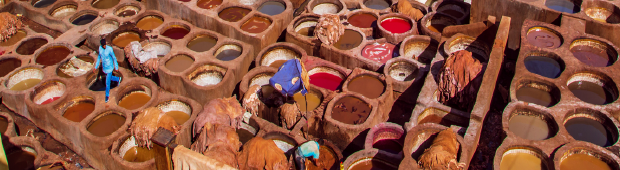
Natural dyes have been used to dye textiles for thousands of years. Before the era of synthetic dyes, artisans used plant extracts, minerals and even insects to create vibrant, lasting colors. Today, this legacy is rediscovering its place in eco-friendly fashion, particularly in the production of professional clothing.
In this post, we discuss different natural dyeing techniques used for textile fibers.
The history of natural dyes through the ages
1. The first traces of natural dye
The history of natural dyes goes back thousands of years. Fabrics dyed as early as 2000 BC in Egypt, India and China.
o The Egyptians used extracts of plants such as indigo and garance,
o The Romans preferred the imperial purple from the murex, a rare shell,
o Asians developed complex dyeing techniques with detailed patterns.
2. Natural sources of color
Each civilization used local resources to create rich and varied colours:
o Red: extract of the common or cochineal,
o Blue: obtained through indigo or pastel,
o Yellow: from turmeric, saffron or broom,
o Green: mixture of blue and yellow, often obtained with specific leaves,
o Black and brown: thanks to walnuts and tree bark.
In the Middle Ages developed dyers guilds in Europe, trade of spices and dyes (ex: garance, pastel).
In the Renaissance, fixation processes were developed to improve colour fastness.
3. The industrial era and the decline of natural dyes
In the 19th century, the development of industrial chemistry revolutionized the dyeing market. Synthetic dyes, which are cheaper and easier to produce, have gradually replaced natural dyes.
However, these chemical dyes have raised environmental and health concerns, which now encourage a return to traditional methods.
The rebirth of natural dyes
The return of natural dyes responds to a growing demand for sustainable and environmentally friendly clothing.
o Less pollution: no chemicals harmful to nature,
o Ethical production: respect for artisanal skills and natural resources,
o Better biodegradability: natural dyes do not leave toxic residues,
There are still a few companies producing natural dyes in France, notably in Apt (Vaucluse), Rochefort-sur-Mer (Charente Maritime), Écordal (Ardennes) and Faoët (Morbihan).
1. The benefits are of several kinds:
o Unique and authentic clothing (such as a woman’s tunic, work pants, kitchen jacket ...),
o Improved skin tolerance due to the absence of irritants,
o A strong and committed brand image, aligned with the values of sustainable development.
2. Increased durability and colors that evolve over time
Contrary to popular belief, natural dyes are resistant and skim elegantly. They give a warm and lively look to professional clothing.
Why is it so rare?
o High cost: Natural dyes are more expensive to produce and require more raw materials than synthetics,
o Less resistance: Natural dyes often have a lower resistance to UV, frequent washing and friction, which is problematic for workwear,
o Limited tints; It is difficult to achieve bright, uniform colours with natural dyes, while professional clothing must meet specific standards (for example, high visibility).
Natural dyes are still mainly used for small-scale, often artisanal or high-end production. For large series and garments subject to industrial constraints, synthetic dyes (more resistant and less expensive) dominate.
At ALM, we have not identified with our partners natural dyes that meet the use and maintenance requirements of our customers. Although 2/3 of our products are sold in white, the chemistry is omnipresent in our fabrics. Indeed, even when bleaching our suppliers use pigments or brighteners to neutralize the yellow tones of the fabric. All the fabrics we use are certified Oeko-Tex Standard 100 (control of more than 300 potentially dangerous substances).
Order now your professional clothing on our e-commerce site and offer your teams an authentic and responsible style!
